Logan Butler · 31 October 2026
Tracing Genetic Markers in Florabay Estuary Plants to Predict Future Salinity Tolerance
Understanding Salinity Pressures in Coastal Estuaries
Estuary ecosystems along the Florabay coastline face rising salinity levels driven by sea level changes and altered freshwater inflows, which researchers have documented through long-term monitoring programs that began in the early 2000s. Plants such as cordgrass and sedges serve as foundational species that stabilize sediments and support local food webs, yet these species exhibit varying abilities to withstand increased salt concentrations over time. Genetic markers offer a pathway to identify tolerant individuals before environmental conditions shift further, and studies conducted through 2025 have isolated specific DNA sequences associated with ion transport and osmotic regulation in these plants.
Data collected from multiple sampling sites shows that certain alleles appear more frequently in populations exposed to higher baseline salinity, while populations in fresher zones retain different variants. Observers note that this variation creates a natural experiment where scientists can track allele frequencies across generations without direct intervention, and the patterns align with broader observations reported by the National Oceanic and Atmospheric Administration on estuarine responses to climate variability.
Methods for Identifying and Tracking Genetic Markers
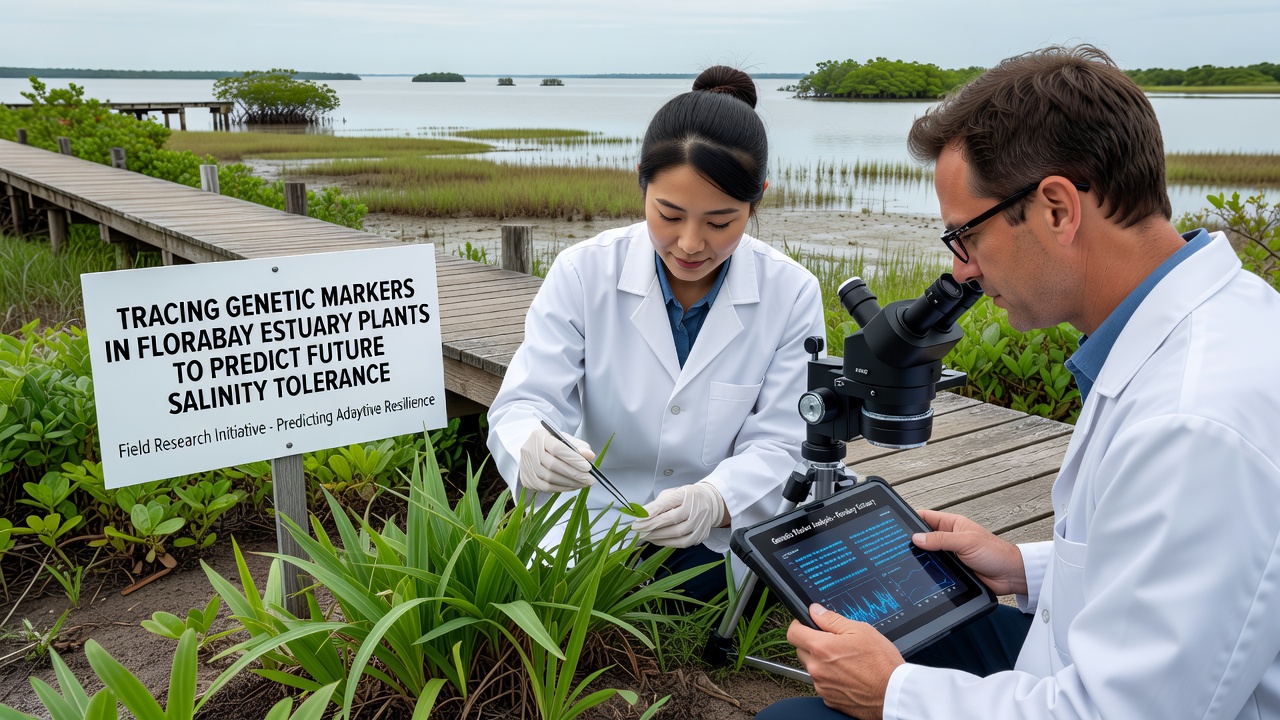
Scientists extract DNA from leaf and root tissues of estuary plants, then apply targeted sequencing panels that focus on candidate genes linked to salt tolerance. These panels cover regions responsible for sodium exclusion, proline accumulation, and membrane stability, which multiple lab trials have shown correlate with survival rates under controlled saline conditions. Field teams return to the same transects each season to collect new samples, allowing direct comparison of genetic profiles between parent plants and their offspring.
By October 2026, expanded datasets from Florabay sites had incorporated environmental metadata such as soil conductivity readings and tidal inundation records, which researchers cross-reference with genetic results to strengthen predictive models. The approach avoids broad genomic scans in favor of efficient marker sets that can be screened quickly across hundreds of individuals, and this efficiency supports repeated sampling campaigns throughout the growing season.
Key Findings from Recent Sampling Efforts
Analysis of over 1,200 plant specimens revealed several single-nucleotide polymorphisms that appear consistently in individuals demonstrating higher biomass retention when salinity exceeds 25 parts per thousand. One marker near a gene homologous to known halophyte stress regulators showed a 40 percent higher frequency in plants from the most saline zones, and follow-up greenhouse experiments confirmed elevated expression of downstream proteins in those same individuals. Another marker set, located in a regulatory region controlling aquaporin channels, correlated with faster recovery after temporary salt spikes, a trait that becomes relevant during storm surges or drought periods that reduce freshwater dilution.
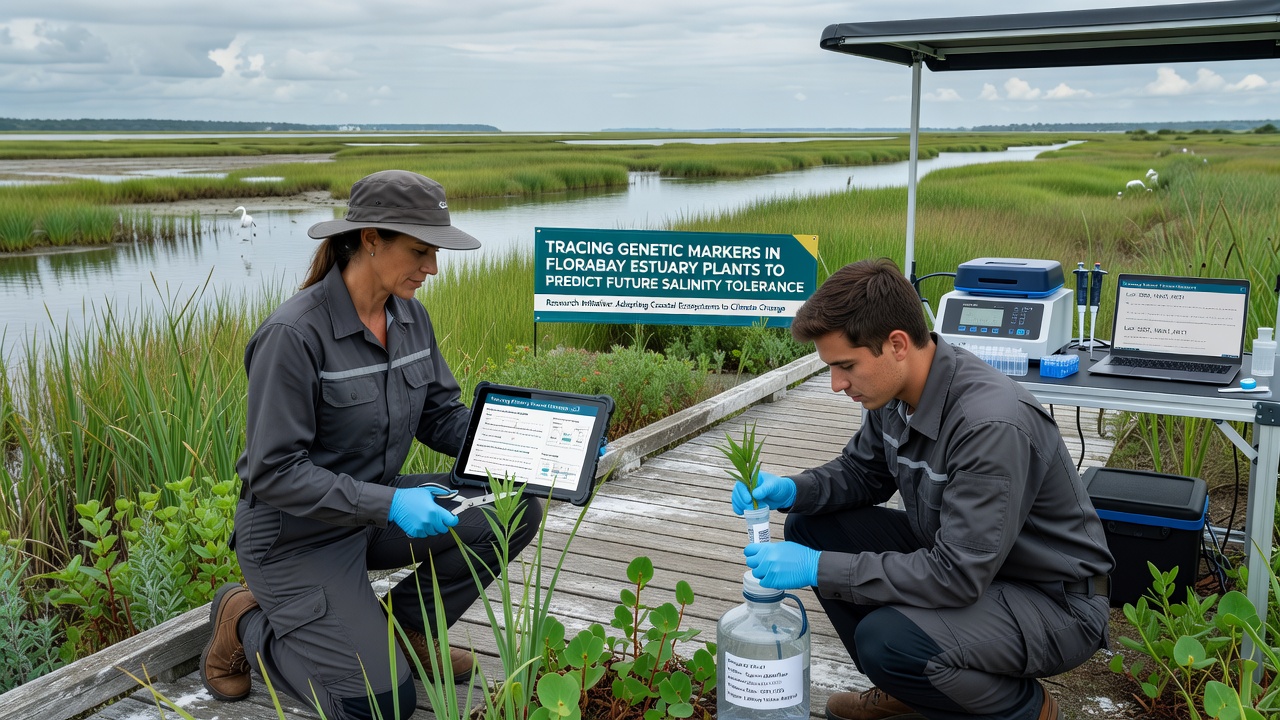
Population-level modeling based on these markers projects that tolerance traits could spread through natural reproduction within three to five generations if selection pressures remain consistent, though dispersal limitations and hybridization with less tolerant species may slow that process. Researchers at collaborating institutions have begun integrating these genetic projections with hydrological forecasts to map areas where tolerant genotypes are likely to persist or expand by 2035.
Integration with Broader Environmental Monitoring
Genetic data now feeds into regional databases maintained by agencies across North America and Australia, where similar marker studies on saltmarsh species provide comparative benchmarks. Florabay findings align closely with patterns observed in Canadian coastal wetlands, where comparable ion-transport markers predict survival under projected salinity increases, and the shared methodology allows cross-validation of results without requiring identical species. Citizen monitoring networks contribute additional tissue samples collected under standardized protocols, expanding the geographic coverage while maintaining data quality standards set by academic partners.
These combined datasets support the development of seed or propagule sourcing strategies for restoration projects, directing efforts toward collection sites that already harbor higher frequencies of tolerance markers. Such targeted collection reduces the risk of introducing genotypes poorly suited to future conditions, and early trials using marker-informed stock have shown improved establishment rates in experimental plots exposed to elevated salt treatments.
Conclusion
Tracing genetic markers in Florabay estuary plants supplies measurable indicators that help forecast which populations may maintain function as salinity regimes change. Continued sampling through seasonal cycles builds the temporal depth needed to separate short-term plasticity from heritable adaptation, and the resulting models offer practical guidance for conservation planning. As monitoring networks expand and analytical tools improve, the same marker frameworks can be adapted to additional species and regions facing parallel environmental pressures.