Ben Keller · 19 September 2026
The Chain Reaction: Florabay Wetland Plants Adapting Reproduction Strategies Amid Pollinator Losses
Coastal wetlands along the Florabay region have experienced measurable declines in native pollinator populations over the past decade, prompting several plant species to shift their reproductive approaches. Researchers documented these changes through field surveys that track seed production, flower morphology, and genetic diversity across multiple wetland sites. Data collected by monitoring teams shows that certain species once dependent on insect vectors now produce more self-pollinating flowers or rely on vegetative propagation to maintain population levels.
Observed Shifts in Plant Reproductive Methods
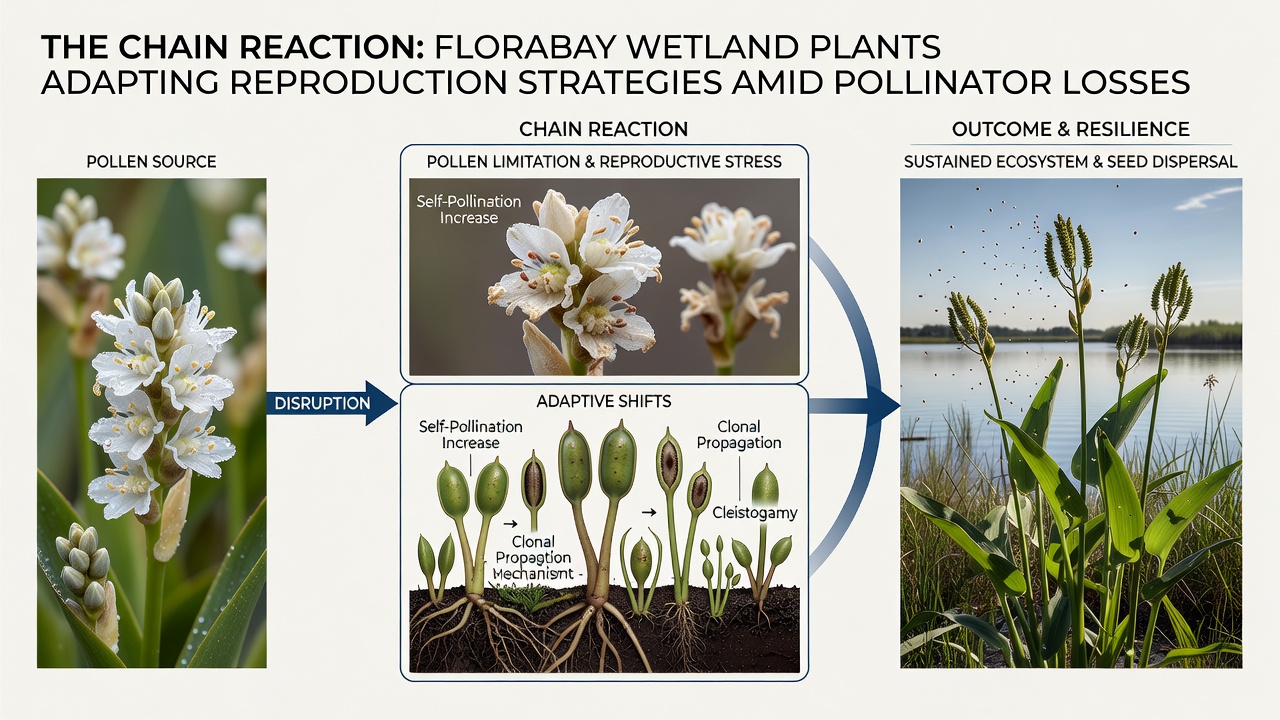
Studies conducted in Florabay marshes indicate that plants such as marsh marigolds and coastal sedges have increased rates of self-fertilization where pollinator visits dropped below thresholds recorded in earlier surveys. This adjustment occurs because reduced insect activity limits cross-pollination opportunities, leading to higher proportions of cleistogamous flowers that remain closed and self-fertilize. Field observations from September 2026 confirmed that several plots exhibited up to 40 percent more selfing events compared with baseline measurements taken five years prior.
Vegetative reproduction has also risen among rhizomatous species, allowing clones to spread without requiring seed set. Scientists note that these plants allocate more resources to underground stems and tubers when flower visitation rates fall, a pattern quantified through biomass sampling and genetic marker analysis. Such changes help sustain cover in areas where seed dispersal previously depended on external agents.
Ecological Drivers Behind the Adaptations
Multiple factors contribute to pollinator losses in these wetlands, including habitat fragmentation, pesticide runoff from adjacent agricultural zones, and altered temperature patterns that disrupt insect life cycles. Reports compiled by the U.S. Fish and Wildlife Service document parallel declines in bee and butterfly diversity across similar coastal ecosystems, providing context for the Florabay findings. In response, plants that once maintained strict outcrossing mechanisms now exhibit flexible breeding systems that tolerate lower pollinator densities.
Water level fluctuations tied to seasonal storms further influence these strategies by affecting flower accessibility for remaining insects. When tides submerge blooms for extended periods, species capable of shifting to self-pollination maintain reproductive output while strictly outcrossing plants show reduced seed viability. Monitoring data reveals that these hydrological pressures compound the effects of pollinator scarcity, accelerating the observed reproductive transitions.
Broader Implications for Wetland Biodiversity
Altered reproduction strategies influence genetic diversity within plant populations, as increased selfing can reduce heterozygosity over successive generations. Researchers tracking Florabay sites have recorded lower allelic richness in several adapted species, although vegetative spread helps preserve local genotypes in the short term. These patterns emerge clearly in long-term plots where both sexual and asexual metrics receive consistent measurement.
Downstream effects extend to associated fauna that rely on wetland plant diversity for food and shelter. When dominant species favor clonal growth, understory composition may simplify, altering resources available to invertebrates and small vertebrates. European Environment Agency assessments of comparable wetland systems highlight similar cascade effects when pollinator support networks weaken, underscoring the interconnected nature of these coastal habitats.
Monitoring and Management Responses
Conservation groups have expanded survey protocols to capture both plant reproductive data and pollinator counts on a seasonal basis. In Florabay, automated cameras and pollen trap networks now supplement traditional transect walks, generating datasets that support predictive modeling of future adaptation rates. These efforts integrate findings from multiple agencies to refine restoration planting lists that prioritize species with resilient breeding traits.
Restoration projects incorporate seed mixes selected for mixed reproductive capabilities, aiming to buffer against continued pollinator pressure. Soil amendments and microhabitat enhancements also receive testing to improve conditions for any remaining insect visitors. Ongoing measurements will determine whether these interventions slow or reverse the documented shifts in plant strategy.
Conclusion
Long-term records from Florabay wetlands demonstrate that plant populations respond dynamically to pollinator reductions through measurable changes in breeding systems and growth forms. Continued data collection remains essential for understanding the pace and extent of these adjustments across broader coastal landscapes.