Logan Butler · 17 October 2026
Citizen Scientists Deploy Acoustic Sensors to Monitor Insect Activity Patterns Around Florabay Estuary Sedges and Grasses
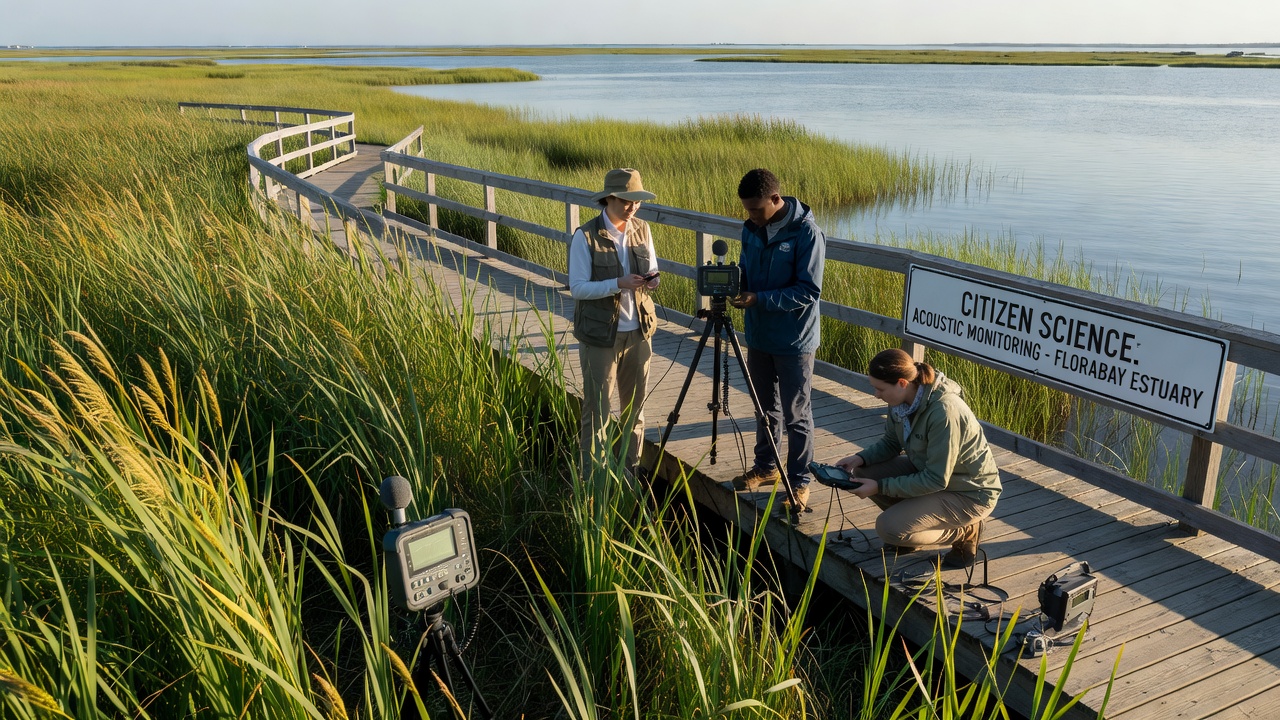
Teams of citizen scientists have placed acoustic sensors throughout the sedges and grasses lining Florabay estuary, where these devices capture the sounds produced by insects as they move and communicate during daily and seasonal cycles, and data collection efforts expanded notably in October 2026 as volunteers returned to the same transects each week to swap memory cards and check battery levels on the units tucked between reed stems.
How the Monitoring System Works
Each sensor records ultrasonic and audible frequencies that researchers later process through software designed to identify species-specific calls, while volunteers trained in basic equipment handling follow standardized protocols that require them to note weather conditions, water levels, and any visible vegetation changes at each site, and the combination of automated recordings with these field notes allows analysts to correlate sound patterns with environmental variables such as tidal movement and plant density without relying on visual counts that prove difficult in dense cover.
Equipment placement follows a grid layout spaced roughly twenty meters apart along both the eastern and western banks, where the sensors sit low enough to pick up ground-dwelling beetles yet high enough to avoid direct splash from waves, and calibration tests conducted before the October 2026 round confirmed that the microphones maintained consistent sensitivity across the full range of insect frequencies expected in the estuary.
Data Collection and Processing Steps
Raw audio files travel from the field devices to a central server where algorithms filter out wind noise and overlapping calls before human reviewers verify a subset of identifications, and this hybrid approach has produced datasets that stretch across multiple months, revealing peaks in orthoptera activity during evening hours and shifts in dipteran presence tied to changes in sedge flowering stages.
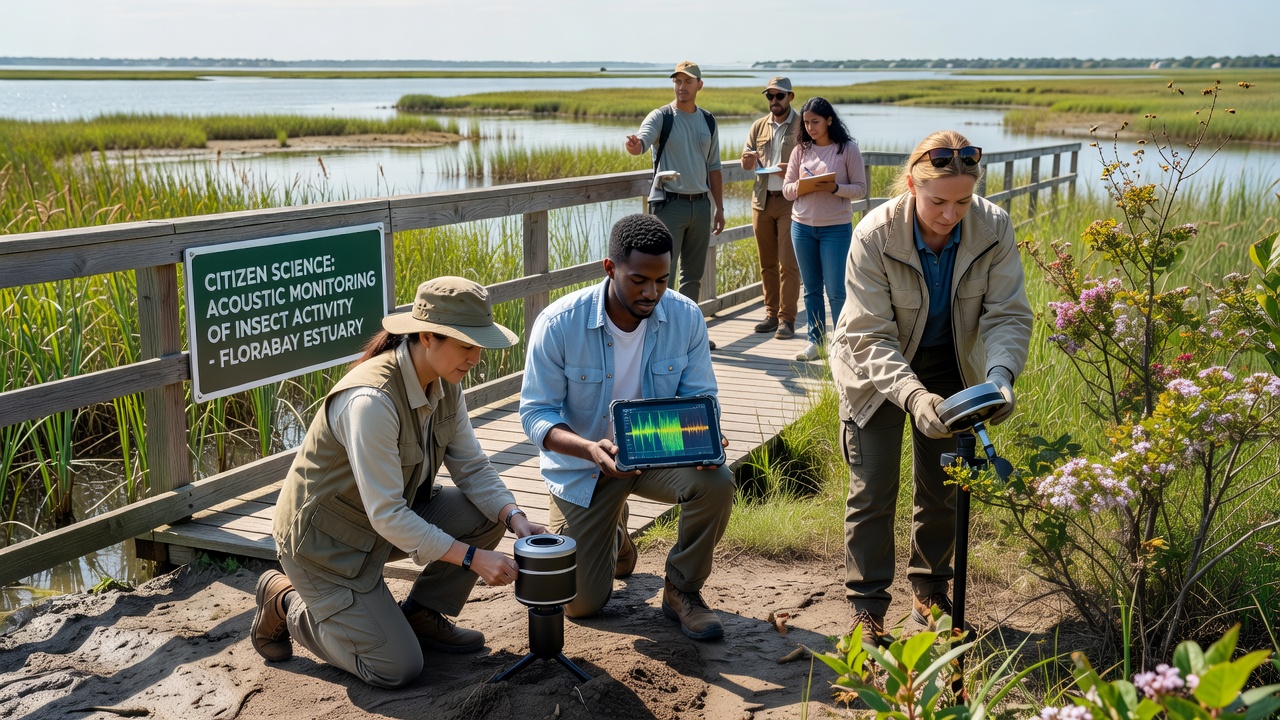
Volunteers upload their observations through a shared platform that timestamps each entry and links it to the nearest sensor, creating a layered record that includes both acoustic signatures and contextual details such as recent rainfall amounts or grazing pressure from waterfowl, while the platform also flags any sensor malfunctions so that replacement units can reach the site before the next scheduled visit.
Patterns Observed in Sedges and Grasses
Analysis of the recordings shows that certain grasshopper species maintain steady chirping rates even when water levels rise several centimeters above the root zone, whereas others reduce activity until the tide recedes, and similar distinctions appear among pollinating insects that favor the taller sedge stands over shorter grass patches, allowing researchers to map microhabitat preferences across the estuary fringe without disturbing the plants themselves.
Cross-referencing the acoustic data with vegetation surveys conducted by the same volunteers reveals that areas with higher stem density support greater overall sound diversity, yet the relationship holds only when salinity remains within a narrow band documented during the October 2026 sampling window, and these findings align with broader studies on estuarine insect responses reported by the U.S. Environmental Protection Agency and comparable work from Environment and Climate Change Canada on coastal wetland acoustics.
Community Involvement and Training
Local residents who participate receive instruction on recognizing basic insect sound categories during evening workshops held at the estuary visitor center, where recordings from previous seasons illustrate the difference between cricket trills and cicada buzzes, and this preparation enables volunteers to contribute meaningful notes even when they cannot see the insects directly, thereby extending the reach of professional researchers who manage the overall project schedule and data quality checks.
Schools in nearby communities have incorporated sensor maintenance into science curricula, with students visiting sites once per month to assist adult volunteers, and the resulting multi-generational teams have sustained continuous coverage through the fall period when insect activity begins to decline yet remains detectable on calm nights.
Broader Applications of the Collected Information
Resource managers use the compiled sound libraries to assess how restoration projects that replant native sedges affect insect communities over time, and the same datasets support comparisons with acoustic surveys conducted in other estuaries where similar grass and sedge communities occur, while the open-access portion of the data allows independent analysts to test new identification algorithms against verified field recordings.
Conclusion
The ongoing deployment of acoustic sensors by citizen scientists continues to generate detailed records of insect activity within the Florabay estuary sedges and grasses, supplying both immediate observations from October 2026 and a growing archive that researchers can examine for longer-term trends in species presence and timing.